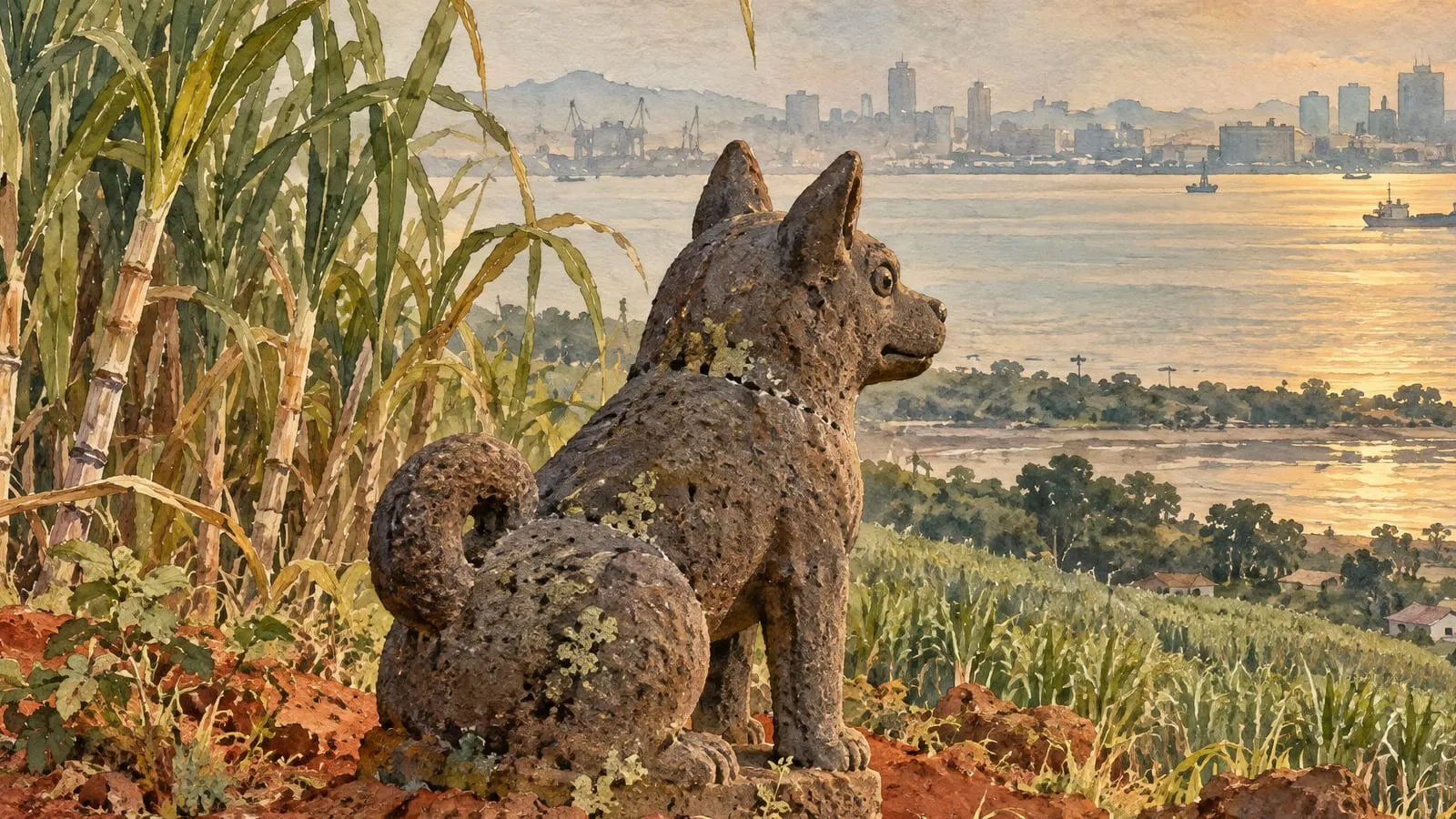
Zhanjiang, 湛江, is a city in Guangdong province, at the southern tip of mainland China. Its own city government says it covers the whole Leizhou Peninsula and a strip of land north of it. So if your family says Leizhou, 雷州, and the map says Zhanjiang, you are looking at the same ground. Leizhou is still on the map too. It is one of the nine parts of Zhanjiang, each with the rank of a county. The surprise runs the other way. Zhanjiang is bigger than old Leizhou. Two of its parts were never in the old Leizhou Prefecture. A prefecture was a unit of government one step above a county.
You grew up hearing Leizhou (雷州) at home. Then a map app, a flight search or a newer stone in the family plot said Zhanjiang (湛江) instead. Is that the same place? The short answer is yes. The longer answer runs through two old prefectures, a French harbour, and a name chosen in 1945.
Is Zhanjiang the same place as Leizhou?
It depends on which Leizhou you mean, because the name now covers three different things.
Leizhou the old prefecture. This is the old Leizhou. The Lui Chew name comes from it: Lui Chew is the older Malayan and Singaporean spelling of Leizhou (雷州). The Leizhou City government’s history of the place dates the name to the year 634. That year Chen Wenyu, the Tang dynasty official who governed the area, asked the emperor’s court to rename it Leizhou. People later worshipped him as Lei Zu. The story of Chen Wenyu as Lei Zu has its own page.
The same history says that from 758 Leizhou held three counties: Haikang 海康, Suixi 遂溪 and Xuwen 徐闻. In 1368 the Ming dynasty made it a prefecture, a fu 府. The Qing dynasty kept it. The prefecture system ended in 1913. Old Leizhou is the southern part of today’s Zhanjiang.
Leizhou the city today. Leizhou City, 雷州市, is a smaller thing. It is old Haikang county under a new name. The Leizhou City government records the change: Haikang county was closed in 1994, and Leizhou City set up in its place. It is a county-level city, which means a city with the rank of a county. Zhanjiang runs it. So when a modern map shows “Leizhou” as one town among many, it means old Haikang, not the whole prefecture.
The Leizhou Peninsula. This is the land itself. It is a long tongue of red earth between the South China Sea and the Beibu Gulf, with Hainan across the strait. Zhanjiang covers all of it. Why the Leizhou Peninsula’s soil is red is told on its own page.
So, yes: in every one of these senses, Leizhou sits inside Zhanjiang. The family stone and the map are not in conflict. They name the same ground at two different times. Your family’s stone may carry more than one of these names in its jiguan line. That is the line that names the family’s ancestral hometown. How to read the jiguan line on a family stone walks through what each name proves.
Why is Zhanjiang bigger than old Leizhou?
Here is the surprise. Zhanjiang holds ground that old Leizhou never did.
Go back two thousand years, to the early Han dynasty. The gazetteer offices of Guangdong and Zhanjiang tell this part. They are the state offices that keep each place’s official history. Their joint account of Zhanjiang is from June 2025. It says that in the early Han, all five of today’s counties and county-level cities sat in one commandery, called Hepu. A commandery was the large unit of government at the time. Three of the five lie in the south. Two lie in the north: Wuchuan 吴川 and Lianjiang 廉江. In 634 the new Leizhou took the southern three. The northern two went another way. By the Ming and Qing dynasties they belonged to a different prefecture, Gaozhou, 高州府. Wuchuan’s own city government dates its move into Gaozhou Prefecture to 1377.
So for more than five hundred years, the line between Leizhou and Gaozhou ran through what is now one city. The two sides came together in the twentieth century, and the Leizhou City government’s history gives the steps. In 1950 Haikang county came under Gaolei, 高雷. Gaolei was a region set over several counties. Its name joins the first characters of Gaozhou and Leizhou. In 1956 Haikang came under a new Zhanjiang region of the same kind. And in September 1983 Zhanjiang became a city with the counties under it. That is the shape it keeps today.
What does that mean for a family stone? Zhanjiang (湛江) is a wide net. It covers the three old Leizhou counties. It also covers Wuchuan and Lianjiang, which were Gaozhou ground, and the four city districts. A stone that says only Zhanjiang (湛江) does not tell you which of these your family came from. It is not a no, either. Speech does not follow the old line neatly. The Leizhou City government counts the south of Lianjiang among the places where Leizhou is spoken.
What are the nine divisions of Zhanjiang?
The city government’s overview lists nine divisions, each with the rank of a county. There are four city districts, two counties and three county-level cities. Zhanjiang governs the districts and the counties directly. The three county-level cities it “manages in trust”, 代管. That is the official term for a looser tie than direct rule. The table sets each division against the old prefecture its ground belonged to.
| Division | What it is today | Before 1913 |
|---|---|---|
| Leizhou 雷州市 | County-level city | Haikang county, Leizhou Prefecture |
| Suixi 遂溪县 | County | Suixi county, Leizhou Prefecture |
| Xuwen 徐闻县 | County | Xuwen county, Leizhou Prefecture |
| Wuchuan 吴川市 | County-level city | Wuchuan county, Gaozhou Prefecture |
| Lianjiang 廉江市 | County-level city | Gaozhou Prefecture |
| Chikan 赤坎区, Xiashan 霞山区, Potou 坡头区, Mazhang 麻章区 | City districts | Not known yet, district by district. The French lease around the harbour took land from both Suixi (Leizhou) and Wuchuan (Gaozhou). |
Read the right-hand column from the top and the old line shows. Three rows say Leizhou, two say Gaozhou, and the city districts are still an open question. If your family’s papers name a county, you can place it on this table at once. If they name only Zhanjiang (湛江), the table shows how much ground that one word covers.
Where does the name Zhanjiang come from?
The name is younger than the migration. It was chosen in 1945, and it came out of a French harbour.
From 1898 to 1945 France held the bay on the peninsula’s east side. It was a leased territory: land China let France run under a lease. Its name was Guangzhouwan, 广州湾, and its capital was Fort Bayard. The gazetteer offices say the French took land and islands from both Suixi and Wuchuan counties, and the Maxie bay between them. So the French corner itself sat across the old line: part Leizhou, part Gaozhou. Guangzhouwan, the French corner of the homeland, has its own chapter.
In 1945 the territory came back to China and became a city. The gazetteer offices give two reasons for its new name, Zhanjiang. First, the area had once belonged to Zhenchuan county, 椹川县. It also had a Zhenchuan inspectorate, 椹川巡检司, a small post of the old local government. Second, the natural bay looked like a great river of deep blue water. Zhan (湛) means deep or clear, and jiang (江) means river. Who put the name forward, and who signed it off, we do not know yet.
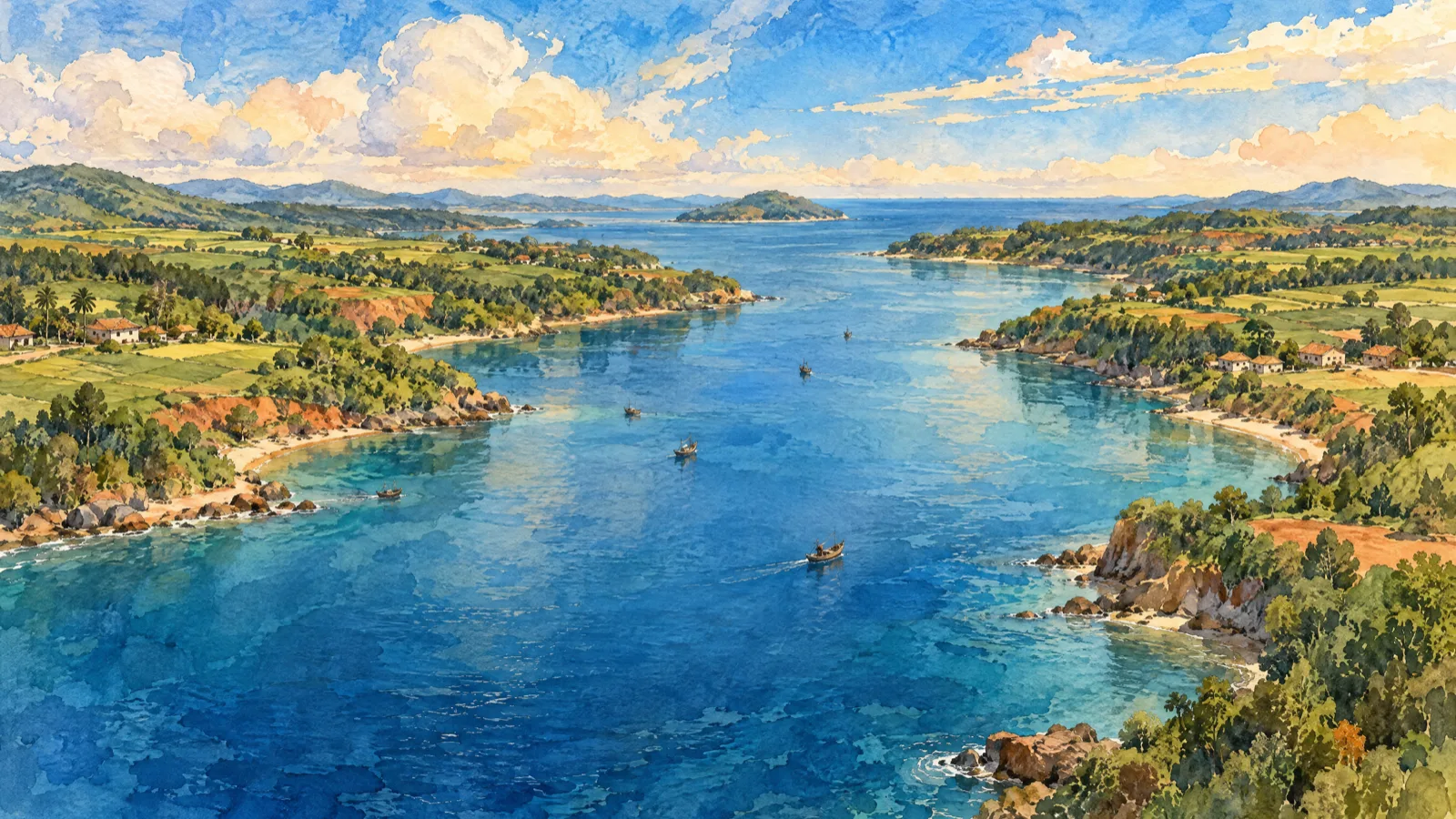
The city came first. The wider region took the same name in 1956, and since 1983 the city has governed the whole peninsula. That is how a harbour name from 1945 came to stand over every county of old Leizhou, and over Gaozhou’s two as well.
What is Zhanjiang like today?
A big city, and a mixed one. Zhanjiang’s city government counts about 7.12 million residents at the end of 2025, on about 13,300 square kilometres of land. About half of them, 49.63 percent, live in towns and cities rather than villages.
It is not one language, either. Beside Mandarin, the city government lists three Chinese language groups spoken there: Cantonese, Min and Hakka. Leizhou speech is a branch of Min, the Leizhou City government says. Leizhou speech, the Lui Chew’s own language, has its own page. So Zhanjiang is not a Leizhou-speaking city as a whole, even though Leizhou is spoken across much of it.
The bay the French leased is now Zhanjiang’s port. In June 2025 the gazetteer offices called it a natural deep-water harbour. They also called it the first modern port China designed and built itself after 1949. It has direct shipping links to more than 150 countries and regions.
And then there is the diving. Zhanjiang goes by the name “Hometown of Diving”. Newsgd, Guangdong’s English news portal, reported in November 2025 that the city’s diving goes back to the 1930s. The report names Olympic diving champions the city trained, among them Lao Lishi, 劳丽诗, and Quan Hongchan, 全红婵. China’s People’s Daily newspaper told Quan’s story in 2021. Her home is Maihe village, 迈合村, in Mazhang District. In May 2014 a diving coach from the city sports school picked her out of a game at her village primary school. In Tokyo, at 14, she became Olympic champion in the 10-metre platform dive. Mazhang is one of the places where the Leizhou City government says Leizhou is spoken. Whether her family speaks it, we do not know.
The diving has a plan for the future too. Newsgd reported a press conference on 18 November 2025. There a deputy mayor of Zhanjiang set out the city’s water-sports plan: yearly water-sports festivals, and diving training that reaches schools in both town and country.
Planning to go? As of October 2026 there is no direct flight from Malaysia. Visiting Leizhou from Malaysia walks through the routes. One goes by way of Guangzhou or Shenzhen and the new high-speed railway. The other goes by way of Haikou, across the strait.
What we do not know yet
Three questions stay open.
Who chose the name. The gazetteer offices give the reasons for Zhanjiang (湛江), the old Zhenchuan county and the deep blue bay. They do not name the person or the office that proposed it in 1945. We do not know yet.
Which side of the old line each city district stands on. Chikan, Xiashan, Potou and Mazhang are the city’s four districts. The French lease took land from both Suixi and Wuchuan. Which districts stand on old Leizhou ground and which on Gaozhou ground, we do not know yet. It is a question for the old county maps.
How many Lui Chew families came from Gaozhou ground. The Lui Chew name points to old Leizhou. Did families from Wuchuan or Lianjiang also join the Lui Chew clan houses in Malaysia? We do not know yet. If yours did, that is a story worth telling.
The next step is the stone itself. Read Reading the jiguan line on a Chinese gravestone next. It shows what an older line, or an older stone, can name under Zhanjiang. And if your family’s stone or papers say Zhanjiang (湛江), we would love to know what they say, or to take a correction to anything on this page.