The question usually arrives with three things attached: a surname, a vague sense that the grandparents spoke something that was not Hokkien, and nobody left to ask. Five checks can settle it. They are not worth the same, and the useful part is knowing which one is doing the work.
Two of the five can confirm a family on their own: the clan association it belonged to, and the ancestral county carved on its gravestones. One is a strong hint. One, the surname, cannot decide anything by itself, whatever the surname lists suggest. And one expires, because it lives in people who are now in their seventies and eighties.
The five checks, graded
Read the third column first. It is where the checks stop being equal. Our own comparison page already grades three of these clues; this page grades all five, and says what each one can and cannot close.
| Check | What you are looking for | What it can prove |
|---|---|---|
| 1. The association | A family tie to the clan house in Melaka, Muar or Singapore | Can confirm. Cannot rule out. Only three of these bodies have ever been documented |
| 2. The gravestone county | The ancestral-hometown line on the oldest family stone | The best single document, if you read the county and not the prefecture |
| 3. The word itself | Any elder who called the family "Lui Chew" or Leizhou (雷州) | A strong hint. In Malaysia the name is obscure enough that a family tradition of using it is rarely a mistake |
| 4. The surname | Your family name against the documented sixteen | Supports. Never decides. Not on its own, in either direction |
| 5. The elders' account | What the oldest living relative remembers, recorded | The only check with a deadline |
Check one: which clan house did your elders belong to?
A clan association, huiguan (会馆), is a hometown society: the body migrants from one place in China set up to be their shrine, lodging house, mutual-aid fund and scholarship fund at once. Ask which one your grandparents paid dues to, got a scholarship from, or were buried through.
This is the strongest check because the answer set is tiny. On the public record there have only ever been three Lui Chew bodies in Southeast Asia: the Lui Chiu Hoe Kuan in Singapore, founded 1892 and the oldest of them; the Melaka Leizhou Association, founded 1899, at 97 Jonker Street; and the body in Muar that began as a mutual-aid group around 1913 and became Persatuan Lui Chew Johor. Nowhere else in the region has a Lui Chew association been documented at all.
A Singaporean family has a starting point Malaysia does not. The Singapore Federation of Chinese Clan Associations, the umbrella body its member associations belong to, publishes a members’ directory, and the Lui Chiu Hoe Kuan’s entry sits in it with its founding year, its 197 registered members and a phone number. The membership roll itself is not public, in Singapore or in either Malaysian town, so this check still ends in a conversation. It just gives you an address to have it at.
Now the part that matters more than the check itself.
Check two: what county is on the gravestone?
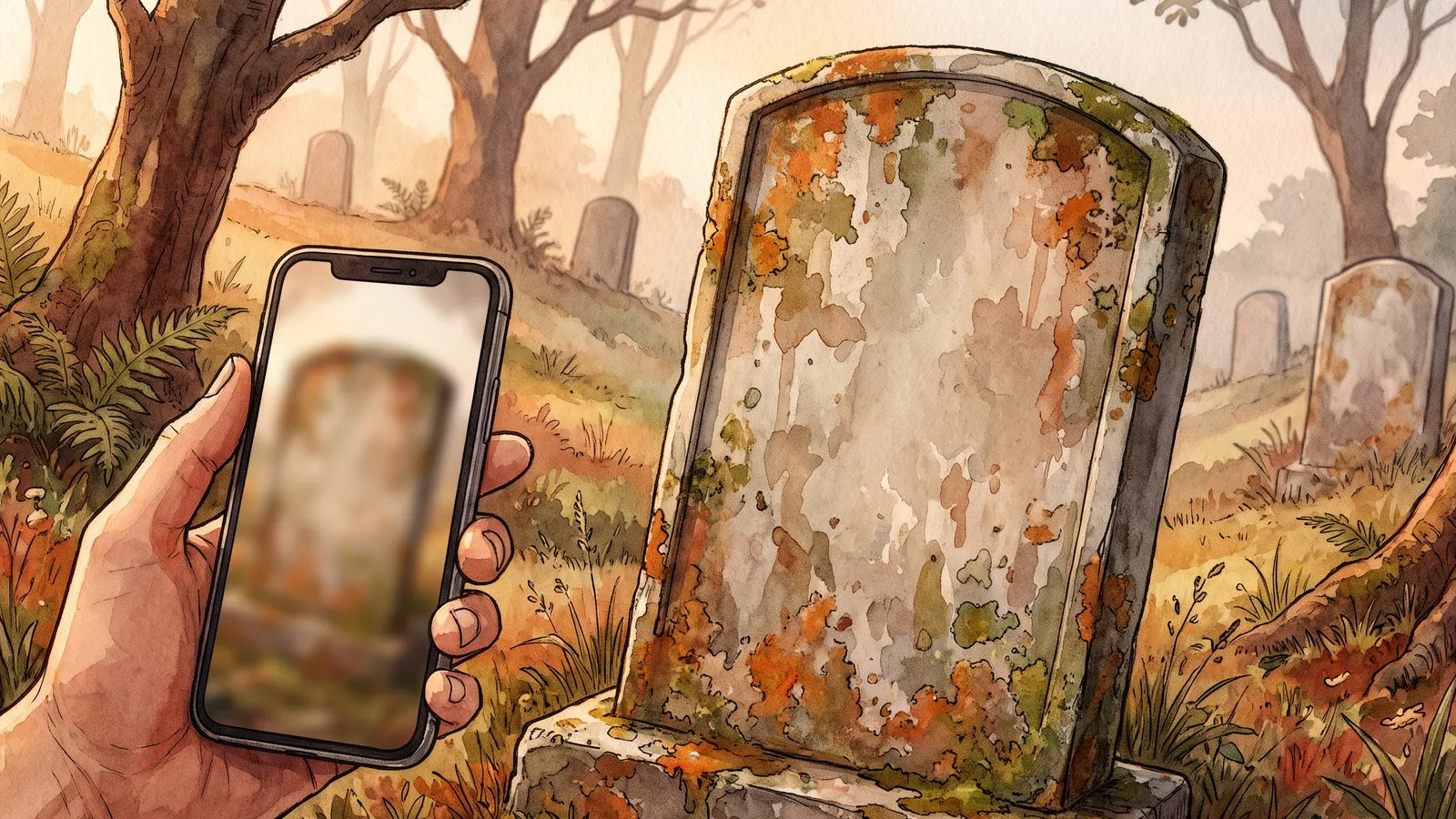
Chinese gravestones carry an ancestral-hometown line, the jiguan (籍贯) or zuji (祖籍): the place in China the family counts as its origin, usually carved small in a top corner. It is the closest thing to a document this question has. Find the oldest stone you can, photograph the whole thing, and read the county.
The word “county” is doing real work in that sentence, and this is where the check usually goes wrong.
A prefecture name does not settle it. 湛江 (Zhanjiang) is a prefecture, meaning a city together with the counties around it, and it is bigger than the Lui Chew. The Leizhou City People’s Government’s own page on the language names where Leizhou is spoken: Leizhou City, Suixi County, Xuwen County, Mazhang District, Donghai Island, the southern part of Lianjiang City, southeastern Guangxi, and then 等地, “and other places”. Two things follow from that sentence, and the second is the one to hold on to.
It names one of its own entries in part only, the southern half of Lianjiang City, so the language does not fill the prefecture. And it ends by declining to close the list, so it is the government’s own account of where Leizhou is spoken rather than a boundary anyone could draw a family in or out of. Handle the page itself with the same care: it carries no source line, and the same sentence has sat on that portal under date stamps of 2017, 2023 and 2026.
So a stone reading Zhanjiang (湛江) has narrowed your family to the prefecture and no further. You need an older stone.
Here is the key, corrected against that government page and against two Chinese encyclopedias, both of them community-edited, which is why the note below says which reads rest on them.
| If the stone reads | What it means |
|---|---|
| 雷州 Leizhou | The old prefecture. Lui Chew, at prefecture level. Keep looking for an older stone |
| 海康 Haikang · 遂溪 Suixi · 徐闻 Xuwen | County level, and Leizhou-speaking. Haikang is today's Leizhou City |
| 麻章 Mazhang · 东海岛 Donghai Island · southern 廉江 Lianjiang | Also on the government's Leizhou-speaking list, and absent from our own three-county list until now. Do not read these as a no |
| 湛江 Zhanjiang | Prefecture level only, and the prefecture holds more than one language. Undecided. Look for an older stone |
| 赤坎 Chikan · 霞山 Xiashan · 坡头 Potou · 吴川 Wuchuan | Not on the government's list, but other reference sources do place Leizhou speech in parts of each. Undecided, not a no |
| 文昌 Wenchang · 琼海 Qionghai · 琼州 Qiongzhou | Hainan Island. The family is most likely Hainanese, the Lui Chew's closest kin |
| A county name plus more characters | A district or a village. This is the prize. Photograph it exactly |
Even a clean county is evidence rather than a certificate, and the same government page says why: inside Leizhou City itself, Leizhou is spoken by more than about 91 per cent of the population, with a small number speaking Cantonese or Hakka, and the page names the towns where. A hometown on the peninsula makes a Lui Chew family very likely. It does not make one certain.
Where to look, in Malaysia: the Melaka community is not documented as having kept a cemetery of its own, so its dead were most likely buried at Bukit Cina, the shared Chinese burial ground in use since 1685 with more than 12,500 graves. The Muar association keeps its own yi shan (义山) communal cemetery, which is the only Lui Chew owned burial ground documented anywhere. Both, and the whole search around them, are laid out in our step-by-step tracing guide.
Check three: did anyone in the family ever use the word?
Ask whether any elder ever said “Lui Chew”, “Luichew”, “Lei Zhou” or Leizhou (雷州) of your own family. All of those are the same word: Lui Chew is the old Malayan and Singaporean spelling, Leizhou is the modern one.
Our existing checklist puts the Malaysian case plainly: the name is obscure enough there that a family tradition of using it is rarely a mistake. The Singapore side reads the same way, for reasons you can check. Leizhou has no line of its own in the census dialect table, and the whole documented community there is one association of 197 members. Nobody acquires a name like that by accident.
That is the whole of this check’s strength, and its weakness is the obvious one: it is memory, and it carries no date, no place and no paper.
One trap to clear while you are here. Lui Chew is not Teochew. The shared “chew” is only the word for prefecture passing through old spelling. Teochew is Chaozhou (潮州), on the eastern side of Guangdong, and one of Malaysia’s largest Chinese communities. Lui Chew is Leizhou (雷州), in the far southwest, and one of its smallest.
Check four: the surname, and why it cannot decide this
Sixteen Lui Chew surnames have been documented in Malaysia, gathered from the Muar and Melaka association records and from one language study. We keep them as the Lui Chew surname registry, and the registry’s own first caution is the important one: it is a sample, not a census, and not a gate.
Work out what that means for your family, in both directions.
- Your surname is on the list
- This proves nothing on its own. Chen (陈) and Li (李) are among the most common surnames in all of China, carried by families with no connection to this peninsula whatsoever.
- Your surname is not on the list
- This proves nothing either. The sixteen come mostly from one association's unusually detailed published history, so the list reflects whose records survived, not who existed.
- The strongest lead on the list
- Jiang (姜). The 2023 field study of Malaysian Leizhou speech, published in the Open Journal of Applied Sciences, names the speakers whose pronunciation it recorded, and three of the five it names are Jiang: Jiang Guangwu, Jiang Guangfu and Jiang Yuxian. Three in one study points at a living family line, which is why our surname registry calls Jiang the most specifically documentable Lui Chew lineage in the public record.
So use the surname the way a detective uses one: to decide where to look next, never to close the case. If yours is on the list, the named individuals in the registry are the people to ask the associations about.
Check five: the one that runs out
Every other check waits. This one does not.
The generation alive today heard the founding stories directly from the migrants’ own children, and those tellers are now in their seventies and eighties. When they go, the answer to this question goes with them, and there is no archive underneath to fall back on: no founding-generation register naming home villages has surfaced from any of the three associations.
So do this one first, even though it is fifth. Bring a phone, ask permission, and record audio rather than taking notes. Ask what the home village was called, even a half-remembered syllable. Who came first, and to which port. What language the grandparents used at home, and whether your relative can still say anything in it.
If your family is Singaporean, there is one more document
Singapore keeps something Malaysia does not appear to: a government record of which Chinese dialect group a person belongs to.
The Immigration and Checkpoints Authority sets it out plainly. At birth, ICA gives a child the registered dialect of the father, a practice it says has been in place since the 1970s. The old paper birth certificate carried the parents’ registered dialect; when certificates went digital that field was dropped and then restored, and it has appeared on digital birth certificates again since 1 September 2022. Your own registered dialect is visible in Singpass, the login Singaporeans use for government services, under the Personal tab, from age fifteen; a younger reader will find it in a parent’s Singpass under the Family tab. ICA names Singpass as the authoritative source for it.
That is a real record, and it takes about a minute to check. It also has two limits that you should know before you read anything into it.
- It follows the father only
- The default comes down the father's line, so a Lui Chew mother leaves no mark on it at all. A "Hainanese" or "Hokkien" entry does not close the question on the other half of your family.
- It records a declaration, not an ancestry
- ICA says the child, the father or the mother can each change a registered dialect by written declaration. So the field records what somebody stated, at some point, which is a different thing from what the family is.
There is also a gap here worth naming, because it may be the reason a Singaporean family never heard the word. Singapore’s Census of Population 2020 counts Chinese residents in nine named dialect groups, Hokkien, Teochew, Cantonese, Hakka, Hainanese, Foochow, Henghua, Shanghainese and Hockchia, and puts everyone else into a single bucket called “Other Chinese”, 244,529 people in all. Leizhou is not one of the nine. Whether ICA’s own register offers a Leizhou option we could not determine as of August 2026: the ICA question page we found returns an error to our requests, and the change-of-dialect form does not render its field list.
Reading your result
Line up what the five checks gave you.
One clean result from check one or check two is usually enough. A documented association tie, or a peninsula county on a stone, puts a family on the Lui Chew side of the strait with the best evidence this question has. You do not need the other three to agree.
Checks three, four and five stack, but never carry a verdict alone. A family word, a registry surname and an elder’s memory all pointing the same way is a strong case and still not a document. Treat it as a reason to go looking for one.
When two checks disagree, the paper wins. A gravestone outranks a memory. Our own rule of thumb is that memory shortens: over three generations “somewhere near Leizhou” and “Hainan” collapse into each other easily, and the two places do face each other across a narrow strait. If a stone says Wenchang and an uncle says Lui Chew, believe the stone about the place and ask the uncle where he got the word.
And an empty result is not a no. This is the honest end of the test, and the reason it is graded rather than scored. Only three associations are documented, and their rolls are not public; Singapore’s census dialect table has no Leizhou line and Malaysia’s ethnicity table has no dialect line at all; the surname list is a sample. A family can be Lui Chew and leave no trace that any of these five checks can find. If that is where you land, write down what you do have, including the dead ends, and put it somewhere your own children will find it. Our community board takes it too, and an unfinished trail there is worth more than a finished one kept private.
What we don't know yet
Frequently asked questions
How do I know if I am Lui Chew? Two checks can confirm it on their own: a documented family tie to the Lui Chew clan association in Melaka, Muar or Singapore, and an ancestral county from the Leizhou Peninsula on a family gravestone. Three more checks support a case without settling it: family use of the word “Lui Chew” itself, the surname, and what your oldest relatives remember.
My surname is on the Lui Chew list. Does that make my family Lui Chew? No. The sixteen documented surnames are a sample drawn mostly from one association’s records, and several of them, Chen and Li among them, are among the most common surnames in China. A surname tells you where to look next and nothing more.
My family’s gravestone says Zhanjiang. Are we Lui Chew? Not confirmed by that alone, and not ruled out either. Zhanjiang is a prefecture and it holds more than one language. The Leizhou City government’s list of Leizhou-speaking places names Leizhou City, Suixi, Xuwen, Mazhang, Donghai Island and southern Lianjiang, and then ends with “and other places”, so it is an account rather than a boundary. Look for an older stone with a county on it.
How can I tell Lui Chew from Hainanese? Mainly by place. Peninsula counties such as Haikang, Suixi and Xuwen point to Lui Chew; Hainan island names such as Wenchang, Qionghai and Qiongzhou point to Hainanese. The two peoples are close kin and their languages are not mutually understood, which is why the confusion is so common. The full comparison is on Lui Chew vs Hainanese.
Where do I find my dialect group in Singapore? In Singpass, under the Personal tab, from age fifteen; younger readers will find it in a parent’s Singpass under the Family tab. ICA names Singpass as the authoritative source for a person’s registered dialect. Read it with its two limits in mind: it descends from the father by default, and any of the child, father or mother can change it by written declaration.
None of the five checks gave me anything. What now? That is a common result and it is not a negative answer. Only three of this group’s associations are documented, their rolls are not public, and it has no line of its own in Singapore’s census dialect table or in Malaysia’s ethnicity table. Plenty of families are Lui Chew with nothing on paper. Record what you have, keep the dead ends, and start the fuller search in the tracing guide, which begins from exactly this uncertainty.
Sources for this page: the Leizhou City People's Government pages on the local language and on the city itself, for the Leizhou-speaking places, the 91 per cent figure, the Haikang and Leizhou City naming history and the village count; the Immigration and Checkpoints Authority's media release of 12 August 2022 on dialect in the digital birth certificate; the Singapore Department of Statistics Census of Population 2020; the Department of Statistics Malaysia population table; the Singapore Federation of Chinese Clan Associations members' directory; Chen Limao (2023) in the Open Journal of Applied Sciences, for the named speakers and the "few thousand" sentence; the Baidu Baike entry for 雷州话 (the Leizhou language) and the Chinese Wikipedia entry for 雷州民系 (the Leizhou people), for the district-level distribution in the note above; and our own comparison, tracing guide, surname registry and Singapore association pages. Chen (2023) and the clan-federation directory are among those listed on our Sources and disclaimer page; the government and census sources are named above. This site is independent and is not affiliated with any clan association or government body. Figures are stated as of August 2026.